eGAD-2
Electronic Generalized Anxiety Disorder
Scale-2
eGAD-2
Anxiety assessment made
easy and quick
What is the eGAD-2?
The GAD-2, also known as the Generalized Anxiety Disorder 2-item scale, is a brief screening tool used to assess the presence and severity of generalized anxiety disorder symptoms. It was derived from the more comprehensive GAD-7 questionnaire and contains only the first two of the original seven items. The GAD-2 is often used as an initial screening tool to identify individuals who may be experiencing symptoms of generalized anxiety disorder and require further evaluation.
Validation of questionnaire
paper version: yes digital version: no
How to use the eGAD-2
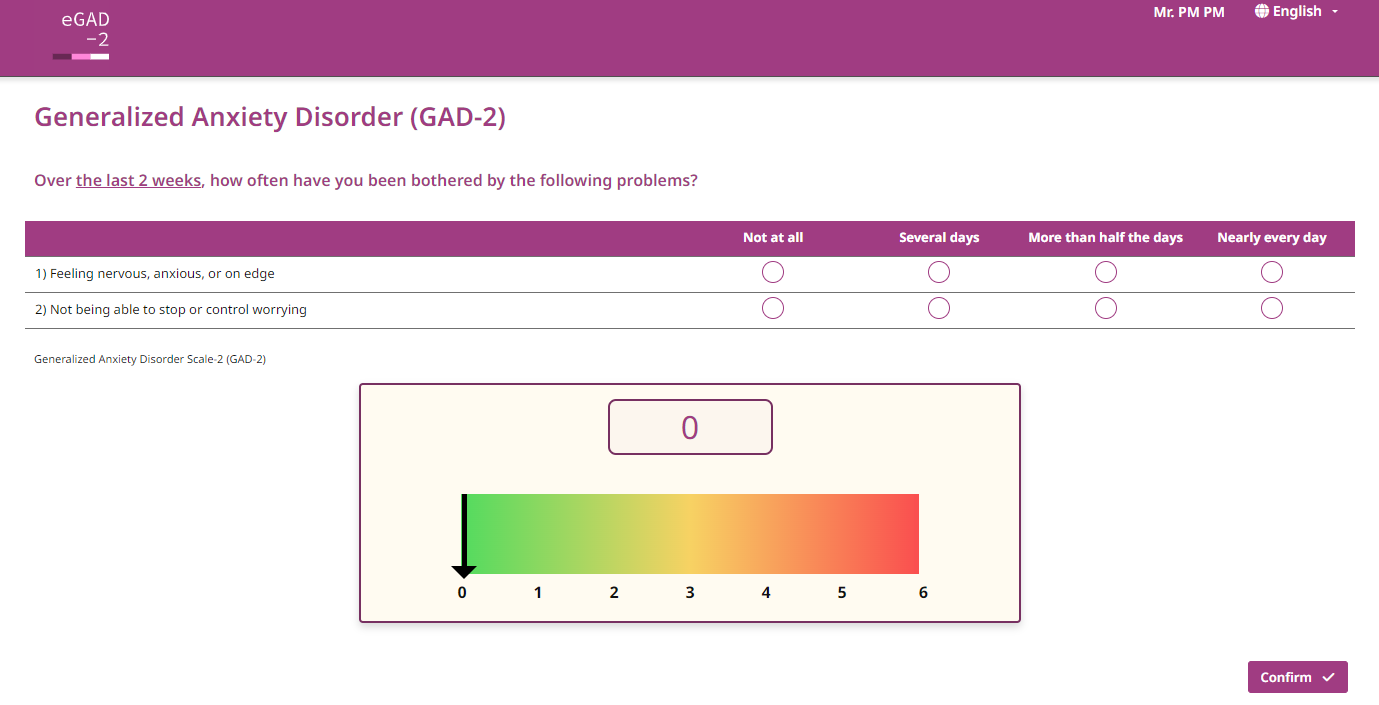
Two questions are used in the GAD-2 to inquire about impairment due to nervousness, anxiety, being on edge, or worrying over the past two weeks. On a scale of 0 (Not at all) to 3 (Nearly every day), respondents indicate how often they have experienced these feelings in the last two weeks.
If a person scores 3 or higher when both questions are added together, an additional assessment using the full GAD-7 or other diagnostic tools may be recommended to confirm the diagnosis of generalized anxiety disorder or to determine the appropriate treatment.
The following versions of the eGAD-2 are available
The importance of measuring symptoms of anxiety disorders in dermatological diseases
Measuring the GAD-2 in patients with dermatological conditions is crucial as it serves multiple important purposes:
Firstly, dermatological conditions can be associated with heightened levels of anxiety, and screening for symptoms of generalized anxiety disorder using the GAD-2 helps identify individuals who may require further evaluation and appropriate psychological support.
Secondly, assessing the impact on quality of life is essential, as dermatological conditions can have a profound psychological impact, and anxiety can amplify the negative emotional consequences. By incorporating the GAD-2 into evaluations, healthcare providers gain insights into the holistic well-being of patients, enabling them to tailor treatment plans to address both the physical and mental aspects. Additionally, the GAD-2 helps guide treatment decisions by identifying and addressing anxiety symptoms that can impact treatment outcomes, medication adherence, and overall satisfaction.
Lastly, integrating mental health assessments enhances the overall care provided, by recognizing the interconnectedness of physical and mental health and ensuring comprehensive support for patients' well-being. By utilizing the GAD-2, healthcare providers can improve the overall management and outcomes of patients with dermatological conditions, addressing both their physical and psychological needs.
Features

USER-FRIENDLY
The eGAD-2 is self-explanatory and easy to use.

QUICK ASSESSMENT
The questionnaire consists of 2 questions, and it takes on average only 1 minute to complete.

INFORMED TREATMENT
The eGAD-2 enables the physician to make informed treatment decisions based on patient-reported data.

MULTILINGUAL
The eGAD-2 is available in different languages. The use of the respective first language reduces language barriers and supports the understanding between physician and patient.

MONITOR ANXIETY SYMPTOMS
Use the eGAD-2 to timely identify heightened levels of anxiety.

ACCESSIBLE FROM ALL DEVICES
With DermaValue, your eGAD-2 is always just a few clicks away. The application is available for PCs, tablets, smartphones, and other devices.

PATIENT-CENTRED
Results from the eGAD-2 provide a patient-orientated analysis of the impact that chronic skin diseases have on patients' lives.

ACCURATE
Studies have shown that the GAD-2 is highly accurate in identifying clinically significant anxiety symptoms.

ENVIRONMENTALLY FRIENDLY
Take care of the environment and save your patient data on the online platform or as PDF files for yourself and your physicians.
References
Validation:
Kroenke, Kurt; Spitzer, Robert L.; Williams, Janet B. W.; Monahan, Patrick O.; Löwe, Bernd (2007): Anxiety disorders in primary care: prevalence, impairment, comorbidity, and detection. In: Annals of internal medicine 146 (5), S. 317–325. DOI: 10.7326/0003-4819-146-5-200703060-00004.
Our other tools

















Our partners






This website uses cookies!
We use cookies to tailor our content to your needs and continuously improve our website. You can decide which cookies you want to allow. Detailed information about the cookies we use can be found in our Privacy Policy and Cookie Settings. You can withdraw your consent at any time.